Prime Minister Narendra Modi’s three-nation tour to Jordan, Ethiopia, and Oman (December 15-18, 2025) comes amid geopolitical churn in West Asia, marked by a fragile ceasefire in Gaza, the fall of the Assad regime in Syria, and the crystallisation of a new Saudi-Pakistan-US alignment, offering a window into India’s evolving role as a strategically autonomous middle power.
While Modi’s itinerary signals India’s commitment to fostering stability through stronger bilateral partnerships, the broader message centres on India’s attempt to secure its interests amid a rapidly hardening security architecture in the Gulf.
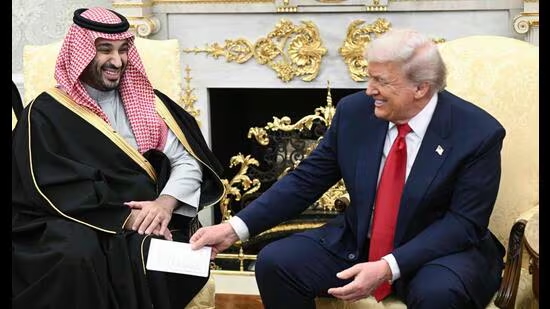
The tour unfolds in the shadow of the “Strategic Mutual Defence Agreement” signed between Saudi Arabia and Pakistan in September 2025, which has effectively re-hyphenated the security dynamics of South Asia and the Gulf, challenging India’s decade-long effort to de-hyphenate its relations with the region. Compounded by the Saudi-US Strategic Defence Agreement of November, which designates Riyadh a “Major Non-NATO Ally”, the Gulf’s security grid is shifting in ways that require recalibrating India’s strategic autonomy.
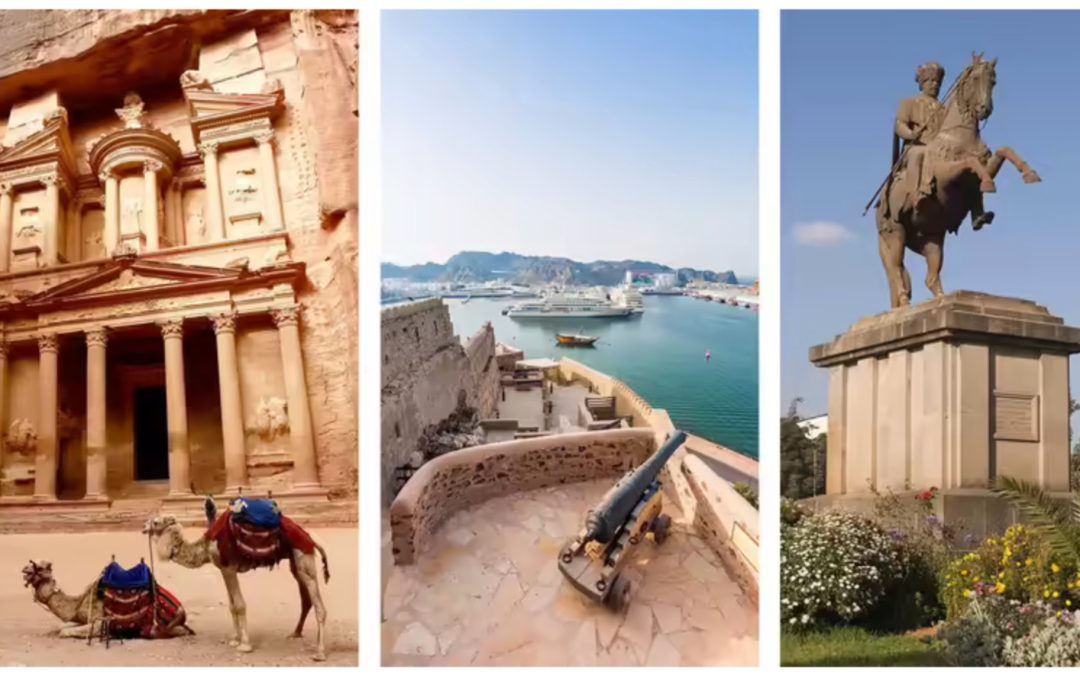
The Prime Minister’s first stop in Jordan, the custodian of Jerusalem’s holy sites, especially the Al Aqsa, highlights the Kingdom’s role as a balanced voice in Arab discussions on Gaza’s future and the two-state solution, acting as a buffer against Levantine instability.
Jordan functions as a steadfast bulwark against radicalisation, extremism, and terrorism in West Asia. Its pivotal contributions to the regional peace process, including its mediation efforts, resonate with India’s advocacy for dialogue and resolution.
With the “Trump Peace Plan” proposing a large reconstruction effort for Gaza, India is positioning itself as a key development partner, having already pledged $4 million towards reconstruction.
Economically, the Jordan leg is vital for India’s food security, as Jordan is a primary supplier of phosphates and phosphoric acid, which are essential to India’s agricultural sector, with fertiliser imports from Jordan crossing the billion-dollar mark in FY 2024-25. Discussions in Amman are likely to focus on securing long-term fertiliser supplies and improving infrastructure at the Port of Aqaba. Jordan also serves as a crucial logistical hub for India’s connectivity to the Mediterranean, being a key element of the India–Middle East–Europe Economic Corridor (IMEC).
Ethiopia, by contrast, represents India’s long game in Africa. As the seat of the African Union and a new BRICS member, Addis Ababa is central to any serious outreach to the continent, where India already has significant commercial and developmental stakes, from Lines of Credit to a sizeable private investment footprint. A prime ministerial stop here underlines India’s preference for South–South cooperation over donor–recipient hierarchies, its intent to offer an alternative to China’s high-debt infrastructure model, and its ambition to shape the BRICS agenda from within Africa, rather than just from Asia.
It also offers an opportunity to advance discussions on the upcoming India-Africa Forum Summit. India’s engagement with Africa is already substantial, with investments exceeding $75 billion and bilateral trade reaching approximately $103 billion in FY 2025, positioning India as one of Africa’s leading trading partners and aiming for a $150 billion growth target by 2030.
The tour concludes in Oman, known as the “Sentinel of the Strait”, arguably the most crucial segment for India’s security interests. The visit is expected to include the signing of the long-negotiated India-Oman Comprehensive Economic Partnership Agreement (CEPA), which aims to increase bilateral trade beyond the current $10.6 billion, address issues such as “Omanisation” to protect Indian workers and grant Omani petrochemicals preferential access to Indian markets.
Beyond trade, the strategic focus is the Port of Duqm. With IMEC facing delays due to regional instability and Gulf states pushing ahead with an “Arab-European” rail link via the new Doha-Riyadh line, India risks being bypassed. Deepening naval access to Duqm gives India a logistical hub outside the Strait of Hormuz chokepoint, ensuring an independent maritime flank in the Western Indian Ocean.
Viewed broadly, this tour signifies a transition from transactional engagements to strategic hedging. The Saudi-Pakistan pact, which introduces a “nuclear shadow” through extended deterrence and collective security obligations, poses significant implications for India’s national security—compounding dynamics from the recent Saudi-US agreement and prompting New Delhi to fortify an outer ring of partnerships. This involves reinforcing Jordan as a continental buffer, Ethiopia as an African anchor, and Oman as a maritime fortress.
This emerging “Indo-Littoral Strategy” seeks to ensure that, amid volatile realignments in the Gulf’s core, India’s regional access remains sovereign, secure, and insulated from coercion by any dominant axis. In this light, the tour transcends an isolated diplomatic event, reflecting India’s self-perception in a multipolar world: not merely as a passive balancer, but as a prudent, interest-driven architect engaging diverse power centres while preserving strategic flexibility. The durability of this approach amid West Asia’s ongoing turbulence will be tested in the coming years.
The article was first published on The Times of India website on 15th December, 2025 with the title ‘Modi’s West Asia tour aims at strategic hedging’.