
Introduction:
The March 2023 agreement between Saudi Arabia and Iran to restore diplomatic relations, brokered by China, marked a significant shift in the Middle East’s geopolitical landscape. This détente between two long-standing regional rivals has had far-reaching implications for regional security dynamics, economic cooperation, and the balance of power. The recent escalation of tensions between Iran and Israel has put this fragile rapprochement to the test, highlighting both the potential and limitations of Saudi-Iranian reconciliation.
Historical Background:
The Saudi-Iranian rivalry has been a defining feature of Middle Eastern politics for decades, particularly since the 1979 Islamic Revolution in Iran. This rivalry, rooted in ideological differences between Sunni Saudi Arabia and Shia Iran, has manifested in proxy conflicts across the region, including in Yemen, Lebanon, Syria, and Iraq. The competition for regional influence has shaped alliances, fuelled conflicts, and impacted the broader geopolitical landscape of the Middle East.
Motivations for Détente:
Several factors drove the decision to pursue détente:
Changing Saudi strategic calculus: Saudi Arabia recognised the limitations of its confrontational approach towards Iran, particularly after attacks on its oil facilities in 2019 highlighted its vulnerabilities.
Iranian economic pressures: Facing continued sanctions and domestic turmoil, Iran sought to reduce regional tensions and potentially open economic channels with Gulf states.
Shifting regional dynamics: The perception of declining U.S. engagement in the region and China’s rise as a diplomatic player influenced both countries’ strategic thinking.
Mutual security concerns: Both countries recognised the need to de-escalate tensions to focus on domestic priorities and economic development.
Key Developments Since the Détente:
Diplomatic Restoration: The reopening of embassies and exchange of ambassadors marked a tangible step towards normalisation.
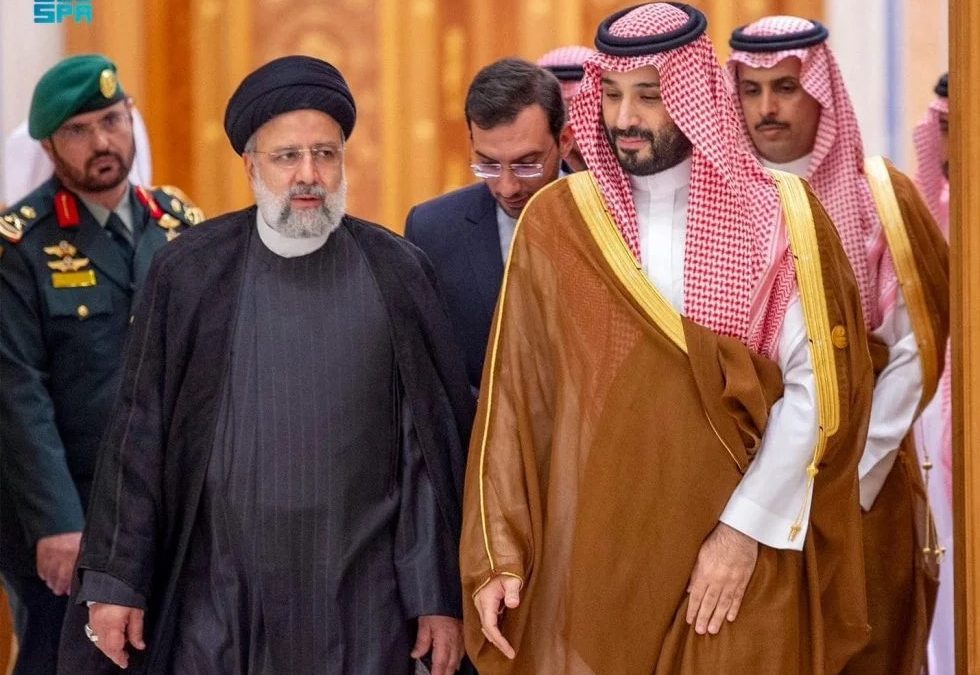
High-Level Meetings: There have been multiple meetings between officials, including Iranian President Raisi’s visit to Riyadh.
Yemen Conflict: There has been a noticeable reduction in Houthi attacks on Saudi Arabia, though a comprehensive resolution remains elusive.
Economic Discussions: While there have been talks about potential Saudi investments in Iran, concrete
economic cooperation has been limited due to ongoing Western sanctions on Iran.
Regional Diplomacy: The agreement has facilitated broader regional diplomatic efforts, including potential normalisation between Saudi Arabia and Syria.
Challenges and Limitations:
Despite these positive developments, several challenges persist:
Deep-seated mistrust: Decades of rivalry and ideological differences continue to influence bilateral relations.
Proxy conflicts: While there has been some de-escalation, Iran’s support for regional proxies remains a point of contention.
Nuclear issue: Saudi Arabia remains concerned about Iran’s nuclear program and its regional implications.
U.S. influence: The United States’ stance on Iran continues to impact Saudi-Iranian relations, particularly regarding economic cooperation.
Regional competition: Fundamental differences in regional ambitions and spheres of influence persist.
Impact of Recent Iran-Israel Conflict:
The recent escalation between Iran and Israel has put the Saudi-Iranian détente under strain:
Saudi neutrality: Saudi Arabia has attempted to maintain a neutral stance, balancing its improving relations with Iran against its strategic interests with the West and potential normalisation with Israel.
De-escalation efforts: Both Saudi Arabia and Iran have used their renewed diplomatic channels to manage escalation risks, with Iran reportedly communicating its intentions to Gulf states before launching attacks on Israel.
Regional security concerns: The conflict has heightened concerns about regional stability, potentially reinforcing Saudi Arabia’s desire for a security guarantee from the United States.
Impact on normalisation with Israel: The conflict has complicated Saudi Arabia’s potential normalisation with Israel, a move that Iran strongly opposes.
Technology and cyber warfare: The role of technology and cyber warfare in the Iran-Israel conflict has implications for regional security dynamics and Saudi-Iran relations.
Regional Implications:
The Saudi-Iranian détente has had significant implications for the broader Middle East:
Gulf Cooperation Council (GCC) dynamics: Other GCC states have generally welcomed the agreement, seeing it as an opportunity for regional de-escalation. However, it may also challenge the unity of hardline stances against Iran within the GCC.
Lebanon and Syria: The agreement has potential implications for political dynamics in these countries, where Saudi Arabia and Iran have historically backed opposing factions.
Yemen conflict: While there has been progress, a comprehensive resolution remains challenging due to complex local dynamics.
U.S. role in the region: The agreement, facilitated by China, has raised questions about the evolving role of the United States in regional affairs and signifies a shift from reliance on Western powers for regional diplomacy.
Israel’s regional strategy: The détente has complicated Israel’s efforts to build a regional coalition against Iran and may impact the progress of the Abraham Accords.
Economic Considerations:
While there is potential for increased economic cooperation between Saudi Arabia and Iran, several factors limit progress:
Western sanctions: Ongoing sanctions on Iran restrict the scope of economic engagement.
Saudi economic priorities: Saudi Arabia’s focus on economic diversification under Vision 2030 influences its approach to regional economic cooperation.
Regional economic integration: The détente could potentially facilitate greater economic integration in the Gulf, though progress has been limited so far.
Oil market impact: The rapprochement could influence OPEC+ decisions and potentially stabilise global oil markets.
Saudi Arabia’s Balancing Act:
Saudi Arabia’s simultaneous engagement with Iran and Israel underscores its shift toward a more balanced, multipolar foreign policy:
Mediation opportunities: Saudi Arabia’s position allows it to potentially act as a mediator in the Iran-Israel standoff.
Domestic and regional stability challenges: Balancing relations with Iran and Israel risks destabilising internal dynamics and relations within the GCC.
Vision 2030 and economic integration: Reducing regional tensions aligns with Saudi Arabia’s long-term economic diversification goals.
Future Outlook:
The future of Saudi-Iranian relations remains uncertain and will depend on several factors:
Implementation of agreements: The extent to which both sides follow through on their commitments will be crucial.
Regional conflicts: Developments in Yemen, Lebanon, and Syria will continue to influence bilateral relations.
Iran’s nuclear program: Progress or lack thereof in negotiations over Iran’s nuclear program will impact regional dynamics.
U.S. policy: Changes in U.S. administration or policy towards Iran could significantly affect Saudi-Iranian relations.
Economic factors: The potential for economic cooperation, particularly in the context of global energy markets, could influence bilateral ties.
Cultural and religious diplomacy: Cultural and religious exchanges could significantly foster a better understanding between Saudi Arabia and Iran.
Climate change cooperation: Given the region’s vulnerability to climate change, environmental issues could become a potential area of collaboration.
Conclusion:
The Saudi-Iranian détente represents a significant shift in Middle Eastern geopolitics, offering the potential for reduced regional tensions and increased cooperation. However, deep-seated rivalries, ongoing regional conflicts, and external factors continue to pose challenges. The recent Iran-Israel conflict has highlighted both the potential and limitations of this rapprochement. While the agreement has facilitated de-escalation in some areas, it has not fundamentally altered the strategic calculus of either country. The coming years will be crucial in determining whether this détente can evolve into a more substantive and lasting reconciliation, with far-reaching implications for regional stability and the broader geopolitical landscape of the Middle East. The success of this rapprochement will depend on the ability of both nations to navigate their competing interests, manage external pressures, and find common ground on key regional issues.

