
My Blog
HOME > MY BLOG

Fighting Hunger – Building Hope
We relished a delicious and sumptuous dinner and satiated ourselves with a fine dessert. Now if we pause for a moment and ponder: How many people in the world were as lucky as we are to get a satisfactory dinner that could give them peaceful sleep in the night?
Almost 870 million people across the globe may go to bed hungry tonight, 200 million of them children!! That means that one in every eight people on Earth goes to bed hungry each night!
Hunger is number one on the list of the world’s top 10 health risks. It kills more people every year than AIDS, Malaria and Tuberculosis combined.
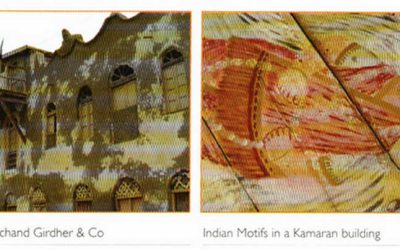
Kamaran Island — Transit for Indian Hajj Pilgrims in the past
Kamaran or the ‘Island of two Moons’ is considered the largest shelf-island in the Red Sea. It was first mentioned in the “History of World Ports” in 525 A.D. Kamaran has been occupied by various foreign powers during its history, which include Ethiopians, Mamaluks, Persians, Portuguese, Turks and the British.
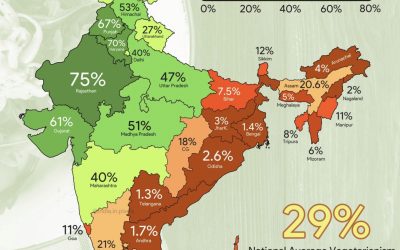
The Rich History and Tradition of Vegetarianism in India
India, the world’s second most populous country, with a population of over 1.2 billion, has around 500 million vegetarians. Vegetarianism is a mainstream way of life with 42% of Indian households eschewing meat, fish and eggs. This constitutes 70% of the world’s vegetarians. India has more vegetarians than all the world’s vegetarians put together. Vegetarianism is ingrained in Indian society, and there are laws requiring all packaged products to be labelled with a mandatory mark showing if the product is vegetarian or non-vegetarian.

History of Urdu Literature
Urdu writing in its various primitive forms can be traced to Muhammad Urfi, Amir Khusro, and Kwaja Muhammad Husaini. The earliest writings in Urdu were in the Dakhni (Deccani) dialect. The Sufi-saint Hazrat Khwaja Banda Nawaz Gesudaraz is considered the first prose writer of Dakhni Urdu.
The first literary work in Urdu is that of Fakhruddin Nizami’s ‘mathnavi’ ‘Kadam Rao Padam Rao’ written during 1421 and 1434 A.D. Muhammed Quli Qutb Shah, the greatest of the Golconda rulers and a distinguished poet, is credited with introducing a secular content to the otherwise predominantly religious Urdu poetry.
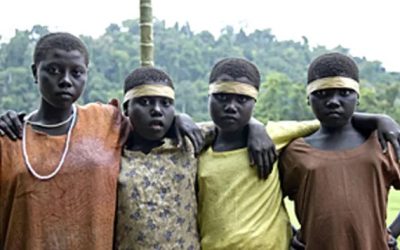
Jarawa Tribes – Confluence of the Present with the Past
The Andaman and Nicobar Islands of India are the treasure houses of several primitive tribes, many of which are facing extinction. The tribes are primarily of two stocks: Mongoloid and the Negroid. The Great Andamanese, Onges, Jarawas and Sentinelese are dominant among the Negroid tribes and are concentrated in the Andaman District. Their background and origin are unclear and continue to be a subject of speculation among scholars and anthropologists. Studies have indicated that the Onges tribes have been living in the Andamans for the last 60,000 years.
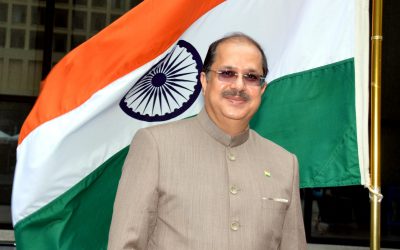
Towards Becoming A Diplomat
After a rather long probation period lasting for about two years, during which I was exposed to various facets of diplomatic and office work in India, I was sent to Egypt in 1991 as a language trainee to learn Arabic and familiarise myself with all aspects of work in diplomatic missions abroad. I studied at the American University in Cairo for three semesters and made progress in Arabic to the best of my ability.
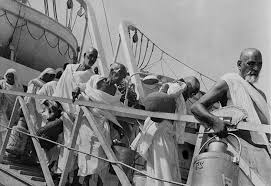
Hajj — An Indian Experience in History
The earliest visit by Indians to Makkah for the Hajj pilgrimage is a matter of conjecture, but such visits likely predate the Muslim conquests of Sindh (664-712 A.D.).
During Mughal times and until the eighteenth century, pilgrims from India had the option of travelling to Makkah either by overland caravans or by sailing ships. The Indian pilgrims travelling by land route via the northwest of India had to pass through long, difficult and hazardous terrains, which also involved crossing the hostile Shia territories controlled by the Safavids.
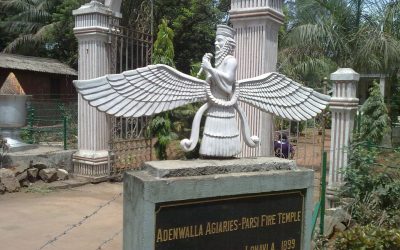
The Story of the Parsis in Aden
After the British conquest of Aden in 1839 A.D., and its declaration as a free port, several Indian traders, including Hindus, Muslims and Parsis, started settling down in this thriving city. According to the 1872 census, there were only 121 Parsis out of the total population of 19,289 in Aden, but by the 1911 census, the number of Parsis living in Aden had increased to 384, of whom 268 were men and 116 were women.
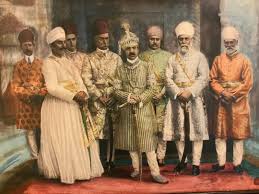
India’s Hadhrami Links
Hadhramaut has a long history as an important centre of Islamic learning. There was a steady interaction between Hadhramaut and western and southern India, particularly in Gujarat, the Konkan Coast, the Malabar Coast, and the Deccan, which is well-documented in history. Important Hadhrami settlements are found in Kutch, Ahmedabad, Baroda, Bharuch, Surat in Gujarat, Calicut and the Malabar Coast in Kerala, Bijapur and Belgaum in Karnataka, Hyderabad in Andhra Pradesh, and Ahmadnagar and Janjira in Maharashtra, as well as a minor settlement in Delhi.