
My Blog
HOME > MY BLOG
The Middle East Needs a Healing Touch
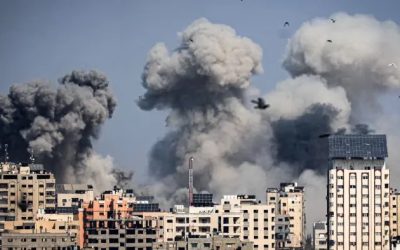
Interestingly, foreign policy issues, predominantly the ongoing conflicts in the Middle East involving Israel and Iran and its proxies—Hamas, Hezbollah, and Houthis—played a significant role in shaping the outcome of the US presidential elections, especially in close races. Trump actively courted the Arab and Muslim voters, mainly in Michigan, through personal community interactions, projecting himself as a ‘peacemaker’ and promising to end the war in Gaza.
Arabs of Indian Origin – A Forgotten Diaspora
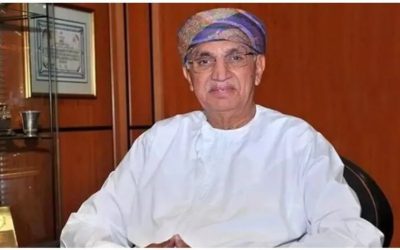
In the mid-19th century, several Indian Muslim scholars and political leaders fled to the Hejaz region to escape British persecution for their participation in the 1857 revolt, often referred to as the ‘First War of Independence.’ Common surnames among people of Indian origin in Saudi Arabia include Al-Hindi / Al-Hind, Dehlavi, Malabari, Siddique, Kidwai, Faruqi, and Surati. While many non-resident Indians (NRIs) from Gulf countries have regularly received the Pravasi Bharatiya Samman award, only a handful of Arab nationals of Indian origin have been honoured with it.
Donald Trump’s Victory: Implications for the Middle East
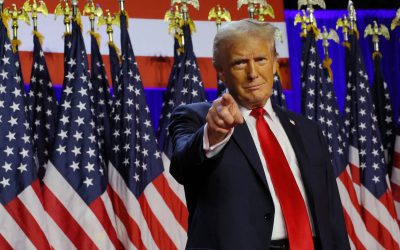
Donald Trump’s return to the White House as the 47th President of the United States is poised to reshape America’s approach to the Middle East significantly. His victory has elicited a range of reactions across the region, from enthusiastic support to cautious concern, reflecting the complex dynamics at play in this volatile region.
Velayat-e Faqih: A Foundational Concept in Iran’s Governance and Regional Influence
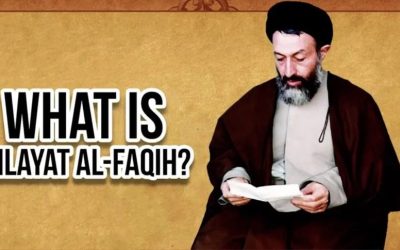
At its core, Velayat-e Faqih transfers political and religious authority to the Shia clergy, making all key state decisions subject to approval by a supreme clerical leader, the Vali-e Faqih. This concept is rooted in Shia Islam but was expanded by Khomeini to apply to governance of the entire state.
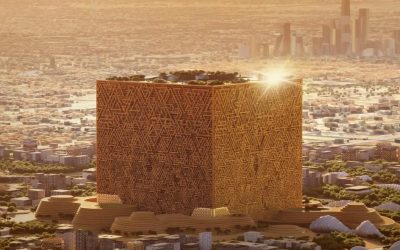
The Mukaab – The Saudi Cube project
The Saudi Cube project, known as “The Mukaab,” is a central part of the New Murabba district in Riyadh, set to be one of the world’s largest single-built structures. Upon completion by 2030, the project will contribute significantly to Saudi Arabia’s Vision 2030 economic diversification, generating approximately SAR 180 billion for non-oil GDP and creating over 300,000 jobs.
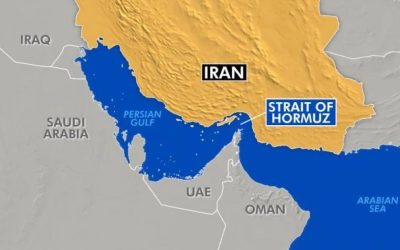
The Strait of Hormuz: A Critical Chokepoint for Global Energy Security
The Strait of Hormuz’s strategic importance has made it a focal point of geopolitical tensions, particularly between Iran and Western powers. Iran’s geographic control over the northern part of the strait allows it to monitor and potentially influence the traffic passing through this vital passage. Over the years, threats of disruption have arisen due to political tensions, military confrontations, and sanctions on Iran related to its nuclear programme.
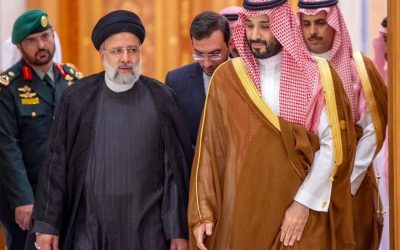
Saudi-Iran Relations in Recent Times: Détente, Challenges, and Regional Implications
The recent escalation of tensions between Iran and Israel has put the fragile rapprochement between Saudi Arabia and Iran to the test, highlighting both the potential and limitations of Saudi-Iranian reconciliation.
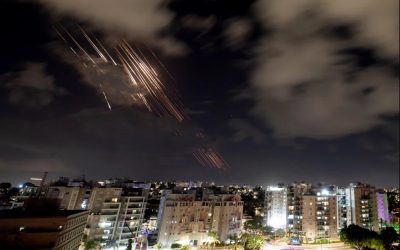
Diplomacy must set the terms in West Asia
Iran’s unprecedented retaliation against Israel with a barrage of nearly 200 ballistic missiles marks a major escalation in tensions between the two countries. This was Iran’s largest-ever single ballistic missile attack on Israel, the second direct attack on Israel since the April 2024 attack that used a combination of drones and missiles. India has a deep interest in West Asia, its largest trading partner, which supplies more than half of its energy and three-quarters of its fertiliser requirements.
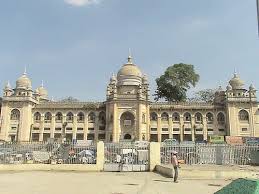
Hyderabad – A rich history of medical education, treatment and research
Hyderabad has long been a pioneer of medical education, treatment and research. It was far ahead of other princely states and British-administered territories of that time, particularly in the field of Medicine.
The Hyderabad Medical School, which eventually became Osmania Medical College, was established way back in 1846 by the 5th Nizam of Hyderabad, Afzal-ud-Dowlah. It was the third-oldest medical college in the entire British India, next only to the Calcutta Medical College and Madras Medical College, which were established in 1835.